
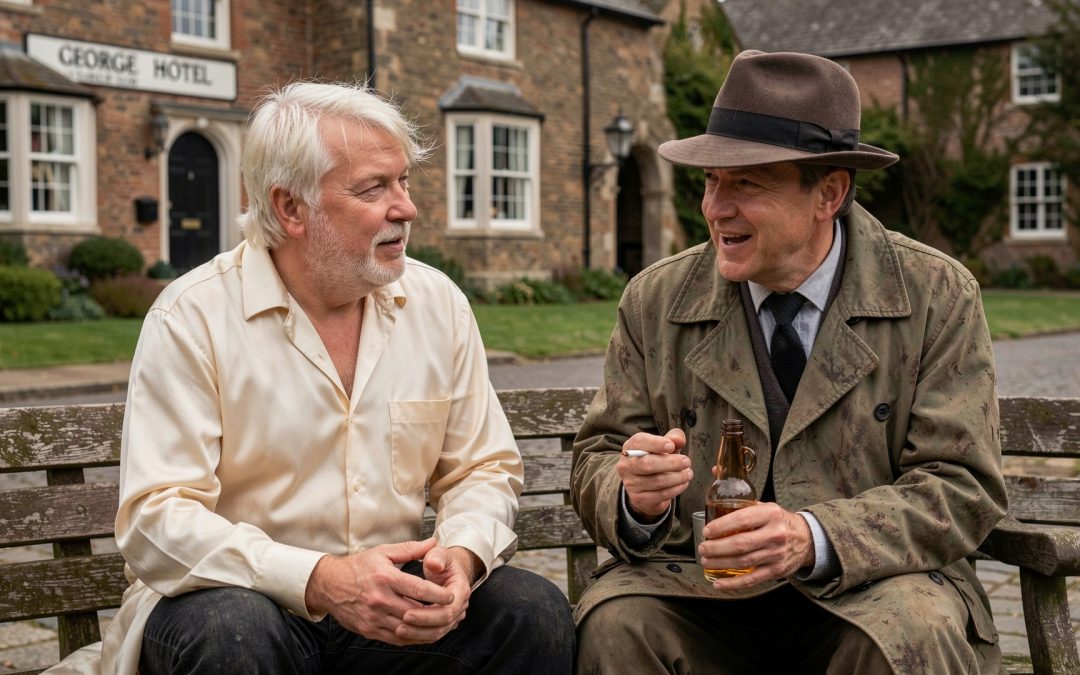
Noir conjures a very particular set of images: rain-soaked American cities, neon signs, a detective with a drinking problem and an even worse attitude, and probably a beautiful woman with a hidden agenda. Whittlesey, where I do most of my writing, offers none of that on the surface. And yet noir keeps creeping into my work anyway, which says something about the genre, about me, or probably both.
What Noir Actually Needs
Once you strip away the trench coats, the cheap bourbon, and the cigarette smoke, noir is really about moral murk: people making compromised choices for understandable reasons, secrets lying just beneath an ordinary surface, and the sense that nobody in the story is entirely as they first appear. None of that requires a particular skyline. It just requires people, and small English towns have no shortage of them.
Think of Miss Marple snooping on her neighbours, squirrelling out their secrets, knowing more about the dark side of human psychology than Freud himself. This is where noir meets the cosy mystery.
If anything, there’s something especially effective about noir tension beneath a quiet, familiar setting. The contrast does much of the work for you. A dark secret in a city feels almost expected. A dark secret in a place that looks like nothing ever happens there hits differently.
And Then Comes Mashing Up With Other Genres
How about all the new, strange ideas that come from other genres? What happens if, in this murky world, an amnesiac private detective with supreme logical skills takes on cases? How is this moral turpitude dealt with by another private detective who is purely psychic? Most importantly, what happens when the two meet face to face and have to solve the same case with their lives hanging in the balance?
Or, as I recently wrote, a noir tale featuring an angel private detective and a beautiful female demon who asks him to take on a case?
Borrowing the Shape, Not the Setting
When noir turns up in my stories, and it does, often blended with whatever else the Muse has decided that piece needs, I tend to borrow its structure and tone rather than its trappings. The world-weary narration. The sense that everyone has an angle. The reveal that recontextualises everything that came before (what I call the scorpion sting in the tail/tale). I don’t need a detective in a fedora to get any of that. I just need characters willing to lie to themselves and to each other.
Why It Keeps Coming Back
I think it’s because noir, at its core, is about people, and people are the same everywhere, including in Whittlesey. The genre gives me permission to be cynical and clear-eyed about human nature in a way that pure fantasy or horror sometimes doesn’t quite allow. It’s a useful lens, even when it’s only sitting in the background of a story that’s officially about something else entirely.
So if you ever spot a flicker of hard-boiled cynicism in anything of mine that’s nominally a fairy tale or a piece of urban fantasy, that’s the noir, quietly doing its work wherever it happens to have set up shop.