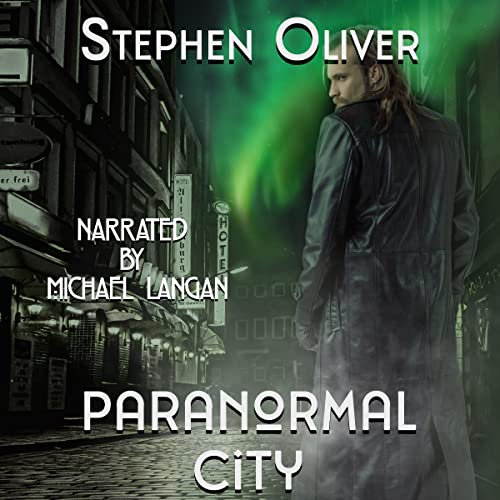
Description:
Welcome to Paranormal City! There’s hospitality for all here, be you vampire, demon, walking dead, or one of the werepeople. We've something for everyone, no matter what your needs or tastes.
Listen to some of the tales of those who live here. They’ll tell you this is the greatest city in the world. Oh, and mundanes are also welcome. Just try to fit in.
A devil’s dozen tales from Paranormal City for your delight…and terror.
Reviews:
Amazon
-
Let's go to Paranormal City to fight crime! — This book is very original, to the point where it is almost difficult to describe in a few paragraphs! Paranormal City is a place that you might never be aware of. It exists on another plane, like hiding in plain sight. There are many Paranormal Cities in different locations. There are various ways to enter, you will have to read the book to understand, The "core" of the city is Darktown. Lots of stuff happens here, mostly bad and/or illegal, But absolutely spooky, violent and scary. Imagine Micky Spillane going to Hell. Twilight Zone, Outer Limit sort of stuff. Michael Sana is the main character. Again, it is difficult to tie him down with a single description. He is equal parts journalist, magician, private detective. He is comfortable in busting up a biker gang as chasing vampires. The book is full of all sorts of odd creatures: ghosts, magicians, cyborgs, and shape shifters. The book is tightly written and the author is Stephen Oliver. — Holly Schneck ⭐⭐⭐⭐⭐
-
Paranormal City is home to all sorts, from ordinary men and women to Vampires, werepeople – I survived the Dark City and found my way home. I bought this book from the author at a book signing. I was intrigued and when I started reading it was instantly drawn deeply into this strange world. His descriptions of the people inhabiting the dark city and descriptions of Hell are absolutely amazing, I thoroughly enjoyed every bit of this book. It appealed to my darker side. Congratulations Stephen Oliver, I look forward to the next one. — George & Jane Pobgee ⭐⭐⭐⭐⭐
-
Unexpectedly engaging – Although this isn't my usual genre, I found Stephen's world engaging. Its different occupants and visitors came together at the end in satisfying fashion and I suspect we may be hearing more of the Paranormal City. — Cathy ⭐⭐⭐⭐⭐
-
Delightfully peculiar – The city may look normal – for a while anyway. Get beneath the surface and you will find ghouls, werewolves, cyberfolk, magicians and beasts from Hell. All living together peacefully, well, until the beasts from Hell arrived. Then, as they say, all Hell actually did break loose.
This is a quirky series of stories, all (or almost all) bound together by characters who slide in and out of them on a whim. Great fun for the fan of fantasy and Hell beasts. — VL Stuart ⭐⭐⭐⭐⭐ -
Something completely different – Paranormal City is unlike any other city or maybe it isn’t, it could be that this city is also here; unseen in the city we inhabit but hiding in plain sight, sharing its existence but in a different way to the one it lives within.
Paranormal City’s inhabitants walk our streets in a form of normality we recognise, rubbing shoulders with the daily commuters, sharing our places and lives but they are in some way different. These are the werewolves, shapeshifters, vampires, cyborgs, demons and creatures which only become strange to us when assuming their other, true hidden identity. Paranormal City becomes the battleground of a titanic struggle between strange forces and creatures. It is a fascinating tale and a damn good read.
Hopefully, these creatures are purely a work of fiction. Great stuff Stephen, more, please – Phil ⭐⭐⭐⭐⭐ -
A bit of a mixed bag! – This book is not for those of a nervous disposition who have vivid imaginations capable of transporting them to the scenes of action, who like to read just before they go to sleep. Your dreams will be peopled with angels, demons, humans with magical powers, and a bogeyman who really doesn't want to be one who hides in closets or under beds because he's claustrophobic. You couldn't make it up, could you, but Stephen Oliver has and the book is one that will keep you turning the pages to find out who or what happens next. It is a riveting tale....or selection of tales that combine to make a satisfying whole. – Hilary ⭐⭐⭐⭐⭐
-
A VERY Original Story – I purchased and listened to this book on Audible books.
This is about a town where there are the unaware humans with no idea about paranormal. This book was several different stories, but all tie into the whole Book. Narrator does a Wounderful job with the various characters voices and the entire storyline and world. – Georgia McNabb ⭐⭐⭐⭐⭐ -
Fun and Fast Paced – Half way through this collection of short stories and I’m excited enough to write a review. I tend to read sci-fi/fantasy and this has a bit of both with horror, crime, and some cyberpunk thrown in. The stories are fun and fast paced, which you don’t find a lot. And when done well, as this one has, I easily found myself sucked into the story and immersed in the world of Paranormal City. I look forward to more books from Stephen Oliver. – Peter Wisniewski ⭐⭐⭐⭐⭐
-
Fine, but Not for Me – I stopped reading this book at about 15% simply because it wasn’t my taste. Readers of noir and / or paranormal fantasy may very well enjoy it. There was just a little too much grit and gore for me. – Amazon User ⭐⭐⭐⭐
-
A Great Read! – Step into the mysterious realm of Paranormal City, where the supernatural and the mundane coexist in an intricately woven tapestry of delight and terror. This collection of a devil's dozen tales offers a captivating glimpse into the lives of vampires, demons, walking dead, werepeople, and even the occasional mundane.
The author's ability to seamlessly blend the paranormal with the everyday creates a rich narrative that keeps you hooked from start to finish.
Themes of acceptance, coexistence, and the supernatural's place in the modern world are expertly explored. Whether you're a fan of spine-tingling horror or heartwarming supernatural encounters, Paranormal City Chronicles caters to both ends of the spectrum.
It is a must-read for those who seek an escape into a world where the extraordinary and the ordinary collide. It's a literary journey that will leave you craving more tales from the bewitching streets of Paranormal City.
Prepare to be enchanted, thrilled, and, at times, chilled to the bone. – Jerry ⭐⭐⭐⭐⭐
Audible
- Paranormal City with a Guy Richie Flair.
I loved PARANORMAL CITY written by Stephen Oliver and narrated by Michael Langan . A collection of paranormal stories that just kept my attention chapter after chapter with colorful character’s that just for some reason made me think of several Guy Richie movies with it’s battle of wits and brawn. Fast paced, and hilarious with some nice twist. — Py ⭐⭐⭐⭐⭐ - Love the details!
I’m new to audiobooks and it took me a little bit to understand how the book was being laid out. But once I understood that it lays out each backstory then wraps around and connects all the stories, I loved it! It’s momentum was like a train, slowly at first but picks up speed until you don’t want to stop listening until you finish it. As I said, I’m new to audiobooks and I was not ready for Michael Langan’s voices but by the end of the book, I think it was a great match. Absolutely adored the characters! I really enjoyed the Stephen Oliver’s mixture of paranormal and religious views. Very unique. Can’t wait to see if there will be more in this series! — Cami Hooper ⭐⭐⭐⭐⭐ - WOW!
Honestly it took a second to get into this book as I wasn't sure where it was going but it turned out great. Narration was perfect as well. This book will easily be one of my favorites to listen to again. — Maceffp ⭐⭐⭐⭐⭐ - AWESOME SHORT STORIES
AWESOME SHORT STORIES that all ended up tying into each other at the end. I really enjoyed listening the narrator who brought the characters to life, I am an avid listener and I jump genres but always hold paranormal fantasy at the top of my list, I look forward to listening to other books by this author and performed by the narrator, A must listen for those who love this genre. I received this book for free but it has no bearing on my review that I am voluntarily leaving of my own volition. — Jamel Figgs ⭐⭐⭐⭐⭐ - love this one
The book is full of all sorts of odd creatures: ghosts, magicians, cyborgs, and shape shifters. — barbara duell ⭐⭐⭐⭐⭐ - WELCOME TO PARANORMAL CITY!
PARANORMAL CITY BY STEPHEN OLIVER ANS NARRATED BY MICHAEL LANGAN comprises of short stories or tales if you will. Each tale intertwines each other. The book was so good it kept me coming back for more. I think the most disappointing thing was that the book had to end! Michael Langan was the perfect person for narration on this book. I hope to listen to more stories from this author in the future
I received the audiobook free in exchange for an honest review. — DDJTJ ⭐⭐⭐⭐⭐ - loved it
Loved it !! this story. the narrator is so fantastic it's like your really there!! good overall — Kindle Customer⭐⭐⭐⭐⭐ - Really enjoyed!
I thought this was a book of short stories but it was instead a book of entwined stories. Paranormal stories at their best. Well written and narrated extremely well! Highly recommend. — B.Shoe ⭐⭐⭐⭐⭐ - Exciting and Entertaining
In my opinion Paranormal City was an exciting and enjoyable listen I was hooked from the very beginning and it did not let me down. The story was well written with well developed characters you either liked or hated but each made the story flow into a web of absolute horror. The book is descriptive and has a great flow that will keep you intrigued.
I received this book for free upon my request but it has no bearing on my review that I am voluntarily leaving of my own volition. — Blackeagle ⭐⭐⭐⭐⭐ - most excellent
most excellent story of the paranormal in the normal world and how both worked together to save a city — Kindle Customer ⭐⭐⭐⭐⭐ - city – Look around you when walking down the road, is the person next to you human or none human. The inhabitants of Paranormal City’s , are sharing the streets with werewolves, shapeshifters, vampires, cyborgs, demons , all looking as human as you and me . Amazing listen and description's
Loved listening – mangankillarney ⭐⭐⭐⭐⭐ - interesting – fascinating characters and an interesting take. I really enjoyed the detective drama side of the novel and the character of Kane. Would love to say more but I don't want to spoil it for others. – Anonymous User ⭐⭐⭐⭐⭐
- Darkly Intriguing, Entertaining and Creepy Good! – Do you know your town, your city, YOUR neighbors? This story will make you think twice about your answer! We’ve all heard about “the city that never sleeps”, “the city by the bay”, and the “windy city”. In this story, the author introduces you to the “Paranormal City” and takes you on an intriguing journey through the dark side of a city that’s home to the normal, the paranormal and the supernatural, all peaceful or not so peacefully, co-existing together! I’ll not be playing spoiler - so the question of peacefully or not won’t be answered here! The characters in this story were my favorite part! So imaginative, so beautifully, so fabulously unique! I’ve never seen such a skillful application of editorial license, and I loved it! No spoilers! Listen and you will see exactly what I mean! The darkly dynamic plot is action packed; at times intense, at times not for the sensitive, at times amusing, and at times frightening! I was throughly invested in this story, my attention held, thirsty for the next juicy details to be revealed! The narration was superb, truly bringing the author’s characters and vision to glorious life, and enhancing the dark “noir” feel of this brilliant story! Five stars across the board! – Gigi ⭐⭐⭐⭐⭐
- Paranormal City – An interesting book of intersecting paranormal stories. These stories all revolve around one city and its inhabitants. It has a good amount of characters and action and there is some gore but it is not overdone. It was interesting to see all the different types of paranormals and how they interacted. This reads more like a detective crime thriller with paranormal and magical characters. Narrator Michael Langan does a good job of moving the story along and keeping the listener engaged. – Gabrielle ⭐⭐⭐

Ah – the Writers Forum. i still think it was a better mag than the one I now subscribe to since Writer’s Forum closed.
But that’s progress (???)
Good luck with the follow-up.