
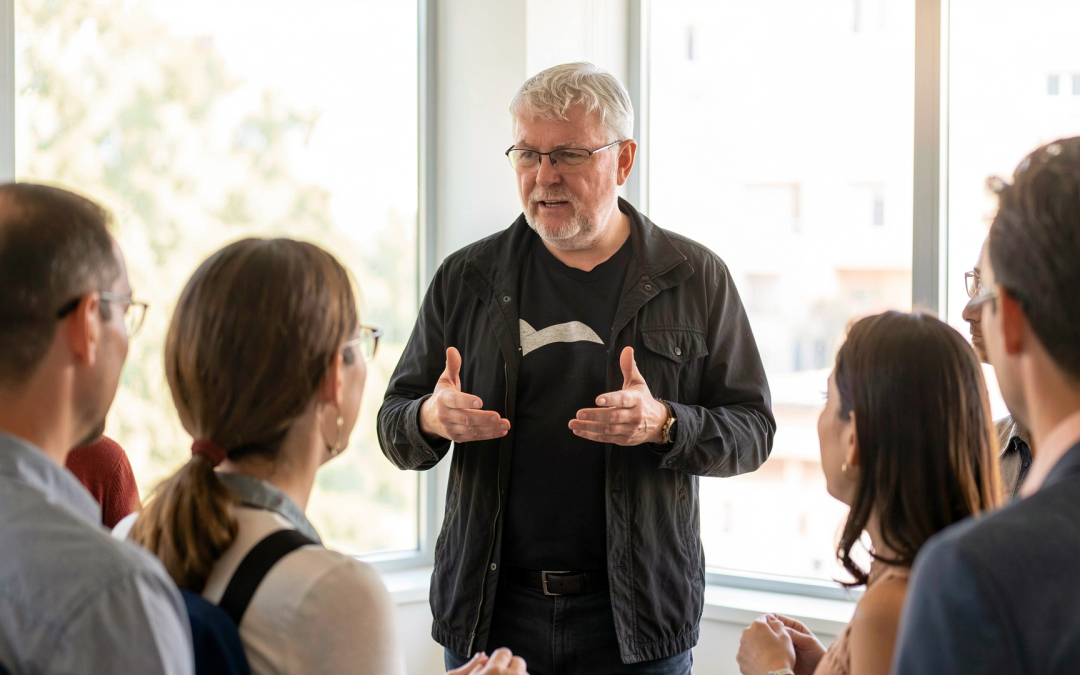
People starting their first novel sometimes ask me for advice, and I’ve noticed I tend to give the same five answers over and over. So here they are, properly written down, for anyone who hasn’t caught me at a talk to ask in person.
1. Don’t Force a Plan If That’s Not How Your Brain Works
I tried, early on, to force myself into being a Plotter, and it killed a novel stone dead. If outlining genuinely helps you, wonderful; keep doing it. But if every attempt at a plan leaves the story feeling lifeless, you might just be a Pantser who hasn’t admitted it to yourself yet. There’s no shame in finding out what you’re writing by writing it.
It does, however, mean that you will probably have to spend more time in the editing and revision phases later. If this is your thing, I can thoroughly recommend Storytelling for Pantsers by Annalisa Parent. It was after reading an ARC (Advanced Reader Copy) version of this that I asked her if she could help me with editing. I have been working with her in the Writing Gym on and off ever since.
The novel I mentioned was an epic fantasy quest. I made the mistake of reading a book titled Take Off Your Pants, which attempts to turn Pantsers into Plotters. I followed all their advice, and the story would not move any further.
It was only after I abandoned the character arcs, the plot arcs, the subtext lists, and all the rest that I was able to bring it back to life again. It had died at 30,000 words, but now it’s nearly five times as long.
What’s holding me up at the moment is finding the time to do historical research into various eras of history, but once I get the information for a particular chapter, then it’s pantsing all the way.
2. The First Draft Is Allowed to Be Bad
This took me embarrassingly long to internalise. The first draft’s only job is to exist. Read, revise, edit, often multiple times, is where the actual quality gets built. Holding the first draft to a finished standard slows everything down and makes the whole process more painful than it needs to be. Furthermore, don’t try to edit while you’re writing. They require totally different mindsets, and you run the risk of letting your Inner Critic interfere with the creative process.
I remember someone boasting on social media that he had never edited a piece of work after he wrote it. He claimed that his thoughts were so perfect that editing was totally unnecessary. I found some links to his work on the internet, and I understand now why he never, ever found a publisher. Let’s just say everything needed extensive editing and revision, and leave it at that, shall we? I don’t think he even used a spelling checker.
Mind you, as Ray Bradbury once said, “You have to let all the bad stuff out before the good stuff can arrive,” or something like that.
3. Find Your Own Annalisa
Whatever shape it takes — a coach, a writing group, a single brutally honest friend — find someone willing to ask you the uncomfortable questions you won’t ask yourself. “Why does the reader need to know that here?” has saved more of my drafts than I can count, and I didn’t come up with it on my own. Normally, it’s Annalisa or Brendan asking me this question.
However, sometimes a friend is enough to derail you completely. For example, the epic novel I mentioned in point one. I’ve been describing the overall story to my friend Mathias. I had just told him my proposed climax (yes, this was a story where I actually knew what the ending was). He asked me a very simple question: “Why does your protagonist do this? Isn’t there another way they can resolve the situation?”
It floored me. It made me rethink the entire arc of my story, including the fact that I had killed someone off very early on. Now, I realised that they had to be in at the end, but I still needed to kill them off. I had to find a way to resurrect them.
My solution, which you will have to wait until the book is published to find out, required me to start from scratch. I literally had to scrap and rewrite over 25,000 words, just to set up the situation that I now realised had to be the climax of the book.
Thank you, Mathias!
4. Genre Mixing Isn’t a Mistake
If your novel doesn’t sit neatly inside one genre, that’s not necessarily a flaw to fix. Some of my favourite work, including a fair bit of Paranormal City, blends several genres at once. Publishers sometimes grumble about this. Readers, in my experience, often don’t mind nearly as much. I know that there are books out there I loved all the more for their genre-bending storylines.
I write self-help, science fiction, space opera, cyberpunk, fantasy, urban fantasy, paranormal, magical realism, horror, fairy tales, slipstream, interstitial, dystopian, noir, detective fiction, action, thrillers, humour, young adult (YA), and children’s stories. Many of my works blend multiple genres. As you can see, there are many possibilities for overlaps. My readers often comment on how I manage to mix things up, making the stories more interesting.
5. Keep Going Even When You Don’t Know Where It’s Headed
This is the one I believe most fiercely. You don’t need to know the ending to start. You don’t even need to know the middle. You just need to keep showing up and following whatever’s currently insisting on being written. That’s how Shuttlers happened after Annalisa told me I needed to write a single-genre book. That’s how almost everything I’ve written has happened.
None of this is a formula. It’s just what’s worked for me, one chaotic novel at a time. Now, you need to work out your own way of doing things.
The same advice could apply to a short story (although I’m unlikely to have the wordcount free to resurrect anyone).
I learned not to tell the reader anything they don’t need to know yet when writing instructions for our resources at the university library I retired from. Tell them only what they need to know now and can keep in mind for the moment.
It did take me a little while though, to realise this applies as much to stories as it does to instructions.
This is one of the reasons why novels like Stephen King’s aren’t on my favourites list. The authors insist on too much description of environments, emotions, and actions, slowing down the flow of the action. Now I know there are times when you don’t want things to move too quickly, but there are others when you definitely need to keep things short and sharp.
Furthermore, I believe it shows a lack of trust in the reader. By describing everything, you are doing the same as making a movie. I, on the other hand, prefer to have my readers as co-creators. I give them a minimum description, and I allow them to fill in the spaces. Because they have been part of the creation of the story that’s in their head, they are more invested, and therefore more likely to buy another book.